.jpg)
Aiden’s Take
By Aiden Crosby
During the first week of June, I went to Montreal for the National School Food Forum, a 2-day event held at the Palais des congrès! Overall, it was an amazing experience, filled with great connections, networking with others across the country, and meeting people from the GTA and the surrounding area who I had never heard of, if not for this forum!
On Tuesday, it was a big field trip day before the overall forum actually took place, and we visited KAHNAWÀ:KE, which is home to many communities that comprise the Mohawk Nation! It was an amazing day full of learning. We visited this beautiful long house and got to meet some amazing people who do very good teachings. The first was an elder who welcomed us to the space and spoke a bit about his connection to the lands there, then a medicine woman showed us so many great plants that have a multitude of uses internally, externally and how to ID them as well. In between these moments, they have an amazing grazing table set up, which was just full of traditional food, absolutely delicious, I’m even hungry thinking of it now! Our last stop here was visiting their growing space, which I unfortunately didn’t take pictures of, but it was a beautiful spiral garden, with mounds making up the spiral. It was a brilliant design and also visually appealing!

The first official day of the forum was on Wednesday June 3. I was blown away by the scale of this forum! Over 500 people attended from all across the continent, even some folks from America who are linked with school food! For me personally, the biggest takeaway from this day was Daniel Balaban, a central leader of Brazil’s school food movement and now the World Food Programme Centre of Excellence against Hunger in Brazil! This keynote session showcased Canada’s recent progress, including its commitment to establishing a permanent national school food program, and recognized the leadership and collective mobilization of stakeholders gathered at the Forum.
Drawing on one of the most advanced and innovative school feeding programs in the world, Daniel proved that lasting transformation is possible when public policies are grounded in a rights-based approach, supported by clear targets and strong governance. Brazil’s experience illustrates how universality, local procurement from family farmers, and mandatory nutritional standards, when supported by civil society mobilization and legislation, can reinforce both children’s health and local economies. Throughout the day, there were many, many breakout rooms. It was really sad that you could only choose one, because there were so many good ones you wanted to attend them all!
One of the other biggest takeaways for me personally was that there were all these leaders and organizations and policy pushers and educators all here to talk about school food, but because of the timing there weren’t many of the people who actually GROW the food! Now, first I want to point out that it’s the first week of June, which practically no farmer can afford to take this time off. Luckily for us at GreenThumbs on our level, we can, and there were a handful of similar organizations, with whom we hope to learn more and network with. But next time, changing the time of year to allow the farmers/growers to attend this forum would be great. They would be able to grow their own business with networking, but also be able to speak up and say hey this is what works for us, this doesn’t work for us, and we came here to be able to work together with you to let you know.
Sunday’s Take
By Sunday Harrison
First of all, I loved going to Montreal to rent Bixi bikes and tour the city a bit! I can’t believe they go through more red lights on their bikes than we do in Toronto!

Then, the Forum was exciting and hearing from folks from coast to coast to coast and many places in between, was remarkable. Only a federally-recognized School Food Program could bring together so many active participants in school food, although I agree with Aiden that the voice of farmers could be much louder. For us, as school garden partners, the workshops on the summer season and our own workshop on school gardens gave us plenty to think about, in terms of understanding that good school food depends on good summer harvests in the fields, which depends on labour. We’d love to see a comprehensive program aligned with the National School Food Program that doesn’t eliminate July and August from its purview, and in fact ensures that children and youth get to take field trips to farms to see for themselves what happens there, as well as supporting production on school grounds. We know that many school grounds are underused, and could be sites for community engagement through the summer while feeding the school population - even symbolically - during the school year. Given that school gardens are mentioned in the National School Food Policy (a first!) we need to understand what it takes to run them successfully.
And what about that new four-year Strategic Plan in our school board, making a “commitment to implementing the Truth and Reconciliation Commission of Canada’s Calls to Action.”? Students are hearing a Land Acknowledgement every morning over the PA system - how does this not become rote like the national anthem that follows? (Cognitive dissonance much?) Anyway, how about students GO OUT ONTO THE LAND that the school is on, to learn from it, have a relationship with it that is not just sport or recess, but actually ties into all of the curriculum subjects? Math? Dimensions and volume of that raised bed. Language? Names of plants in Anishnaabemowin or local Indigenous language, English, French, Latin. Art? Botanical drawing. Science? Well, that one is pretty obvious. There’s a Science link in pretty much every grade, to connect with in the school garden, bring back into the classroom and the school kitchen too.
In my initial research on school gardens 20-odd years ago, I observed that in the USA, in jurisdictions that had a Farm-to-School program, school gardens were more likely to be created and maintained, and were an obvious bridge, a cognitive link, from the school to the farm. The opportunity presented by the National School Food Program to link farmers and schools is exciting and complex. What we don’t want, in my opinion, is for corporate food to jump in to save us from that complexity.
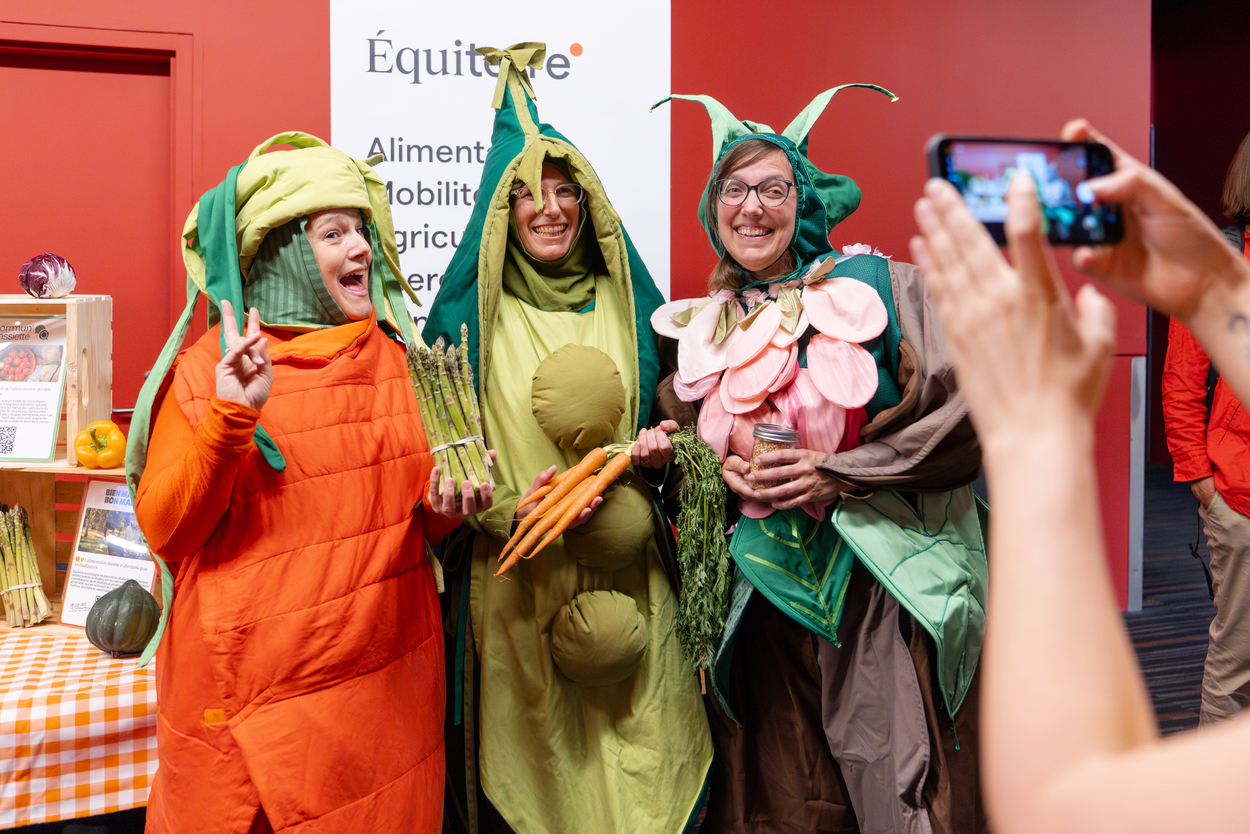
I’m excited by the possibilities and also find it all a bit daunting - I’m just glad there’s some really smart people figuring out the logistics, because every region, every ecosystem, every place in so-called Canada has its own logical partners and available resources, including paid labour. As a small charity always looking to pay our staff properly, while also thoughtfully recognizing volunteer labour such as that on our board of directors, as well as folks in the community looking for the experience of gardening, taking produce home, learning to compost and being social with their neighbours in a purposeful way, I’m excited to fit school gardens into the bigger picture. Thanks to the organizers of the School Food Forum for presenting an opportunity for us to network and learn more about school food across the land. You can visit nourishingfutures.info and see more - and note that the front page of the website highlights a picture of a school garden because they are beautiful, but we need to develop more capacity to make them a sustainable reality and not just a pretty picture.





.svg)
.svg)
.svg)
.avif)