The Bridge June Issue: Op-ed by Sunday Harrison
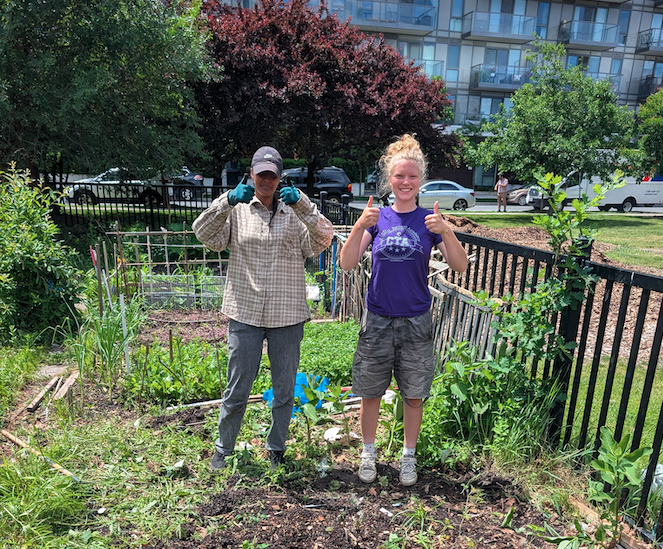
In an education system under attack, school gardening grows healthy kids For more than 20 years, a small charity housed in Regent Park’s Daniels Spectrum has been gardening with Downtown East elementary students at three public schools: Winchester, Rose Avenue and Sprucecourt. As of fall 2024, Green Thumbs Growing Kids began partnering with Eastdale Collegiate, the first secondary school garden in the cluster of schools it serves.

Garden-based learning and school food gardens are not a new idea – in fact, they have a history in the provincial curriculum.
Until the 1940s, Ontario teachers used to live close to their schools so they could water and care for the gardens in summer!
Times changed: corporations took over the food system and urban life meant shopping for food. Schools didn’t take responsibility for feeding the students. In fact, Canada was the last of the G7 nations to institute a national School Food Program – just two years ago. Only a minute earlier, in 2022, the phrase “food literacy” was added to the Ontario curriculum – giving teachers more reason to book the Green Thumbs programs for their school grounds.
Education in Ontario is under attack by a premier and education minister who seem to believe in starving the public system, pushing those who can afford it into private schools and grabbing school properties for development, but there’s an incredible surge of interest and support for school gardens. These gardens help feed kids the just-in-time nutrient-dense veggies and fruits that the Canada Food Guide says they should have, but who are likely not to be getting the recommended amounts. Only 10–22 per cent of kids (varies by age) get the recommended daily amount of fruits and veggies.
Gardening has made a comeback, both during the Covid-19 pandemic and afterwards, with the high cost of groceries. School lands are often large and underutilized. Rooftops are the fast-growing choice for urban agriculture: not only is food produced, but energy use is mitigated and stormwater managed. Even after removing subsidies for greening rooftops, growing food on them is increasingly popular.
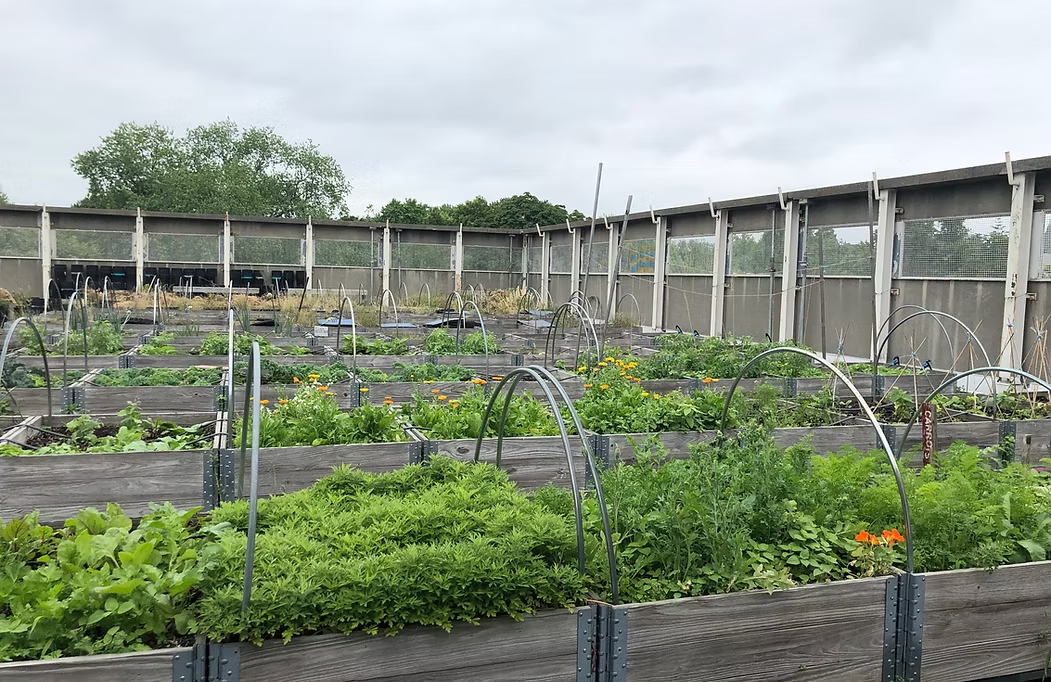
A unique rooftop site for high-quantity and high-quality production is atop Eastdale Collegiate, installed by FoodShare and the Toronto District School Board in 2011/12. Many students are in the Mild Intellectual Disability program of TDSB, but Eastdale is at risk of closure for being “a small school”, as are many programs for students with special needs, and for low-income and racialized students.
Education, publicly funded and equity-focused, is a keystone of democracy, and we cannot let a handful of bureaucrats answering only to corporate donors keep us from enjoying the fruits of many years of advocacy that culminated in the National School Food Program. This guarantees every school child a meal, and supports food literacy in the form of gardens, climate-aware food education, local procurement and healthy, nutritious food at school.
Community partners like Green Thumbs Growing Kids animate, harvest, weed and water in summertime, making sure the produce gets to those who need it.
Please find us on the web at https://www.greenthumbsto.org!




.svg)
.svg)
.svg)
.avif)