View our programs
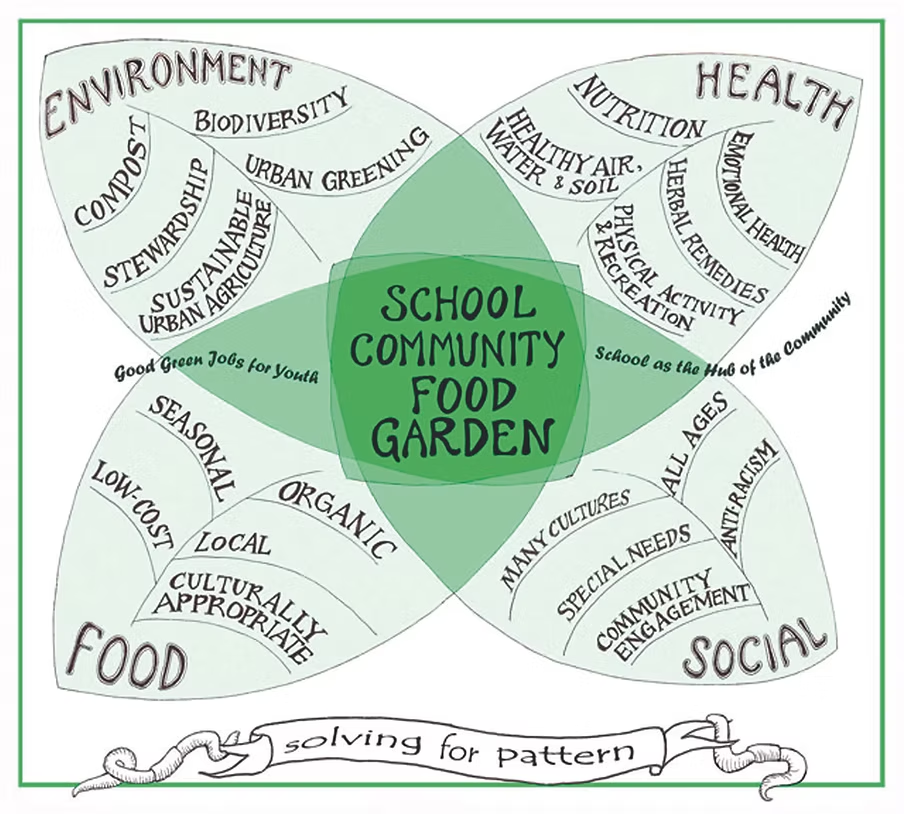
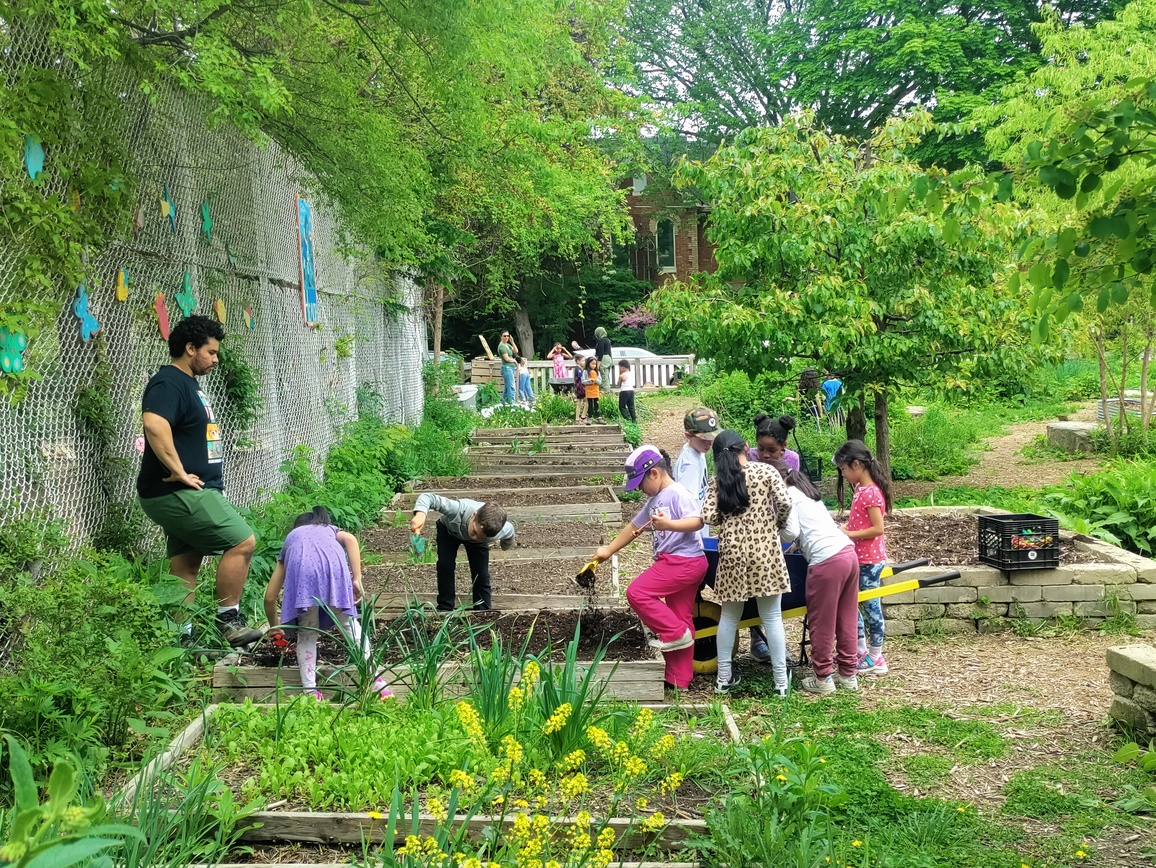
Formerly known as Kids Growing, our school day program for K-12 students uses gardening and food activities to support learning objectives along with food literacy, itself a curricular expectation.The gardens are dynamic classrooms for vibrant hands-on learning in many subject areas.
Programs are linked to Ontario curriculum, especially the science strands, but also math, language, art, social studies, healthy eating and healthy physical activity. Teachers register for time slots during class time, and we support garden learning in our workshops in much the same way as a physical education teacher supports health curriculum or a librarian supports literacy, across the grades. Volunteers and staff ensure that outdoor programs are accessible and safe for teachers to bring their classes, and help teachers learn more about school gardening.
Volunteer training is available through the School Gardens Land Back Volunteer program. Volunteers can work with staff and learn how to manage school gardens, and if they live in another neighbourhood they may take their new knowledge back to their community schools. Furthermore, participants will have the opportunity to learn from Indigenous mentors to experience and learn first hand about decolonization and reciprocity. Our TDSB students are hearing the Land Acknowledgement every morning over the PA system - here’s an opportunity to bring it to life.
Activities are based on seasonality and the particular school sites, whether full sun or shade, access to water and storage, rooftop or ground level, etc. Seasonal programming connects our youth to the rhythm of our place, following the climate cues. Food is exciting to grow, but so are flowers, herbs and even trees from seed.
Our vision of a healthy school garden is similar to a food forest, where food and enjoyment of nature are linked, and All our Relations benefit, even the squirrels, for whom we must grow a bit extra of everything. We use composting and regenerative organic methods, keeping our garden spaces free of chemicals. In winter, we run classroom programs learning how to grow microgreens indoors using no chemicals, and using vermicomposting to help manage food scraps. Arts, crafts and design related to the garden is also a great winter activity.
To learn more about programs, click the button below and connect with us by email.

.jpg)
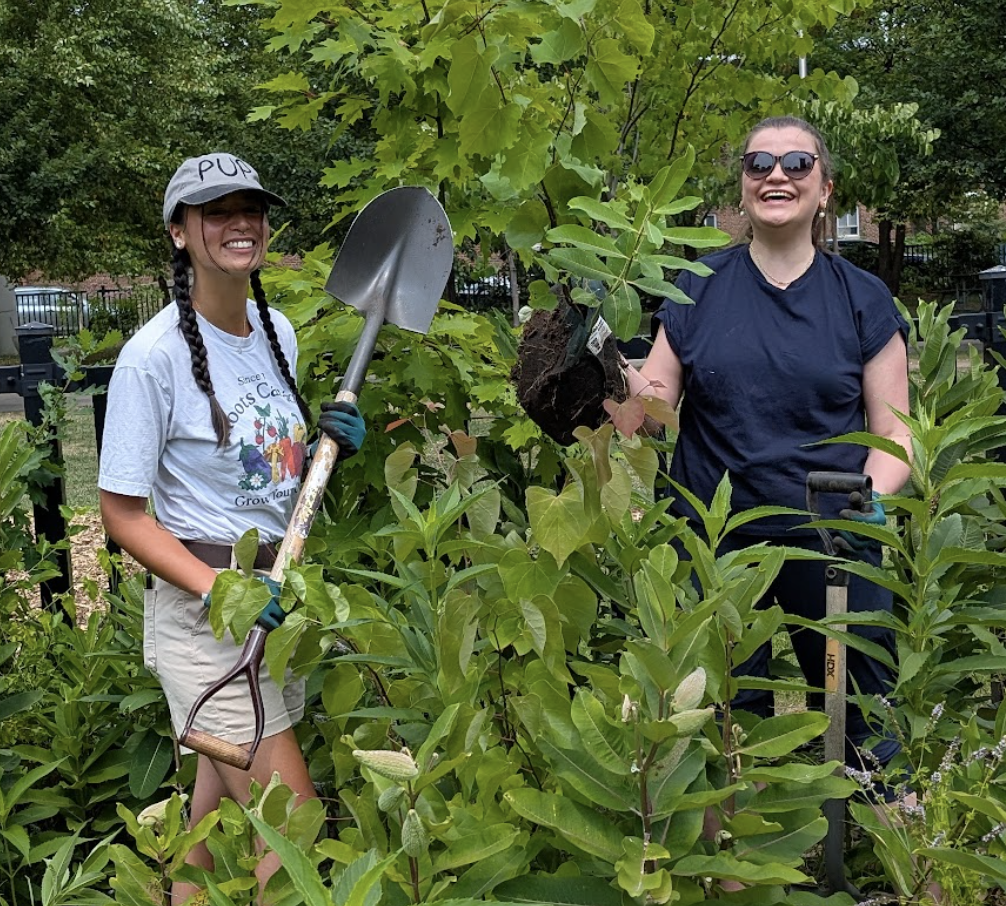
Secondary and Post-Secondary students can join the team and earn hours or credits towards their diploma in Secondary School, Early Childhood Education, Community Work, and Teacher Candidates, among others. They also have opportunities for paid work, helping provide recreational programs for young children in the gardens.
To join the mailing list for upcoming program registration, click the button and connect with us by email message us
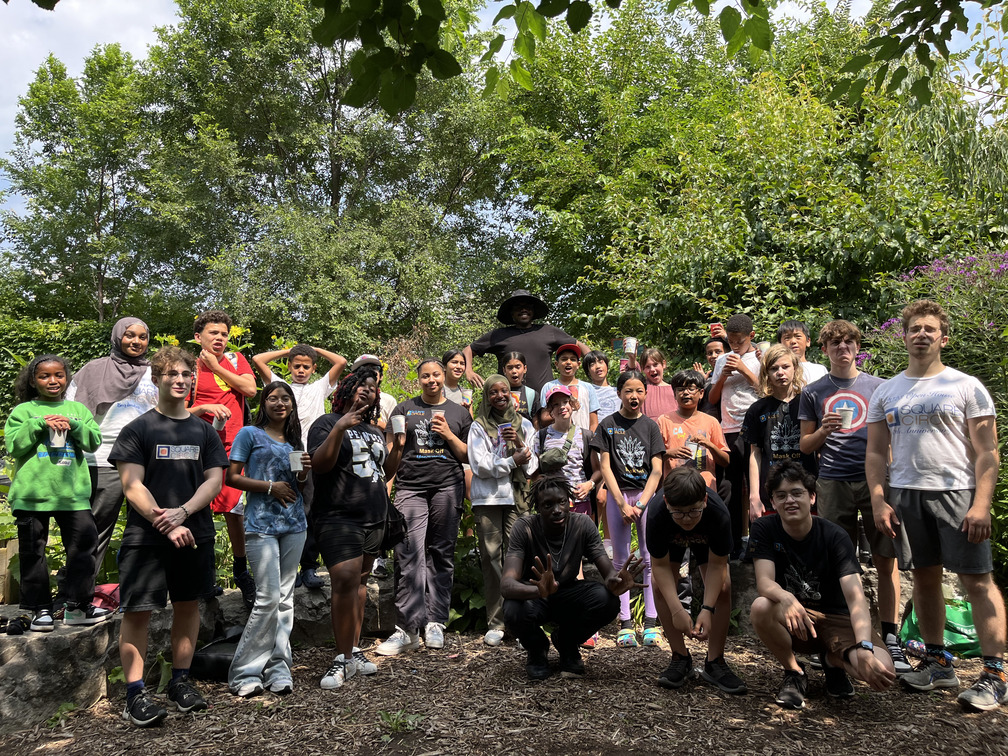
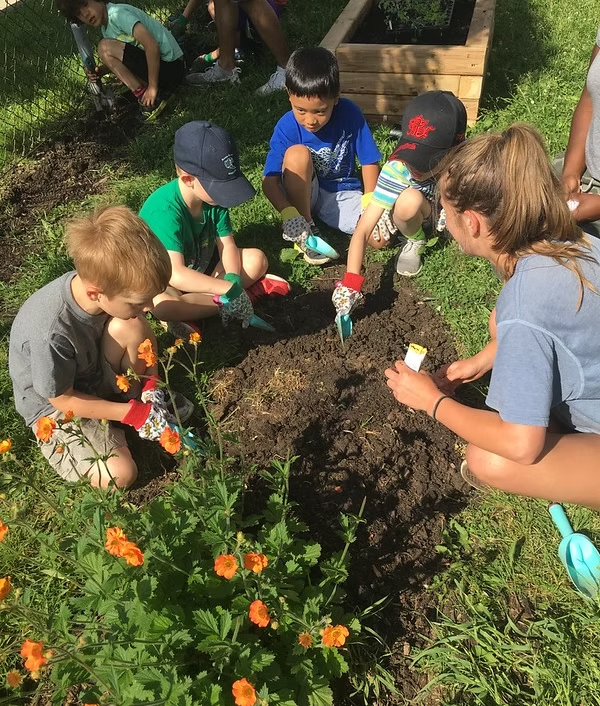
In summer, our gardens are cared for by the community through structured programming. Many children don’t get out of the city very much in the summer – so the cool green spaces with running water are especially compelling. Food harvested goes to volunteers, or to local market or restaurants. Food security and access is top of mind during the harvest season. Seed is collected, packaged, and then locally distributed for use next year.
Summer programs are critically important in the school garden since summer maintenance is often a barrier to success. Active programming with a focus on play, nutrition, and games turns the garden into a summer camp destination, providing healthy outdoor activities for low or no cost.To learn more about programs, click the button below and connect with us by email.
Please note - we do not run our own summer camp, rather, we partner with other local child and youth-serving agencies to run programs.




.svg)
.svg)
.svg)
.avif)




.avif)