by Laura Billet
Workshop Date: August 19, 2026
On August 19th, 2026, we teamed up with Right to Food and the new Sumac Community Kitchen to bring fermentation into the light! Sumac CFC donated the space and in return a few of their folks' participated.
Gamze Suher led participants through the basics of fermentation before they got their hands busy in the Sumac Community Kitchen and tried the technique themselves.
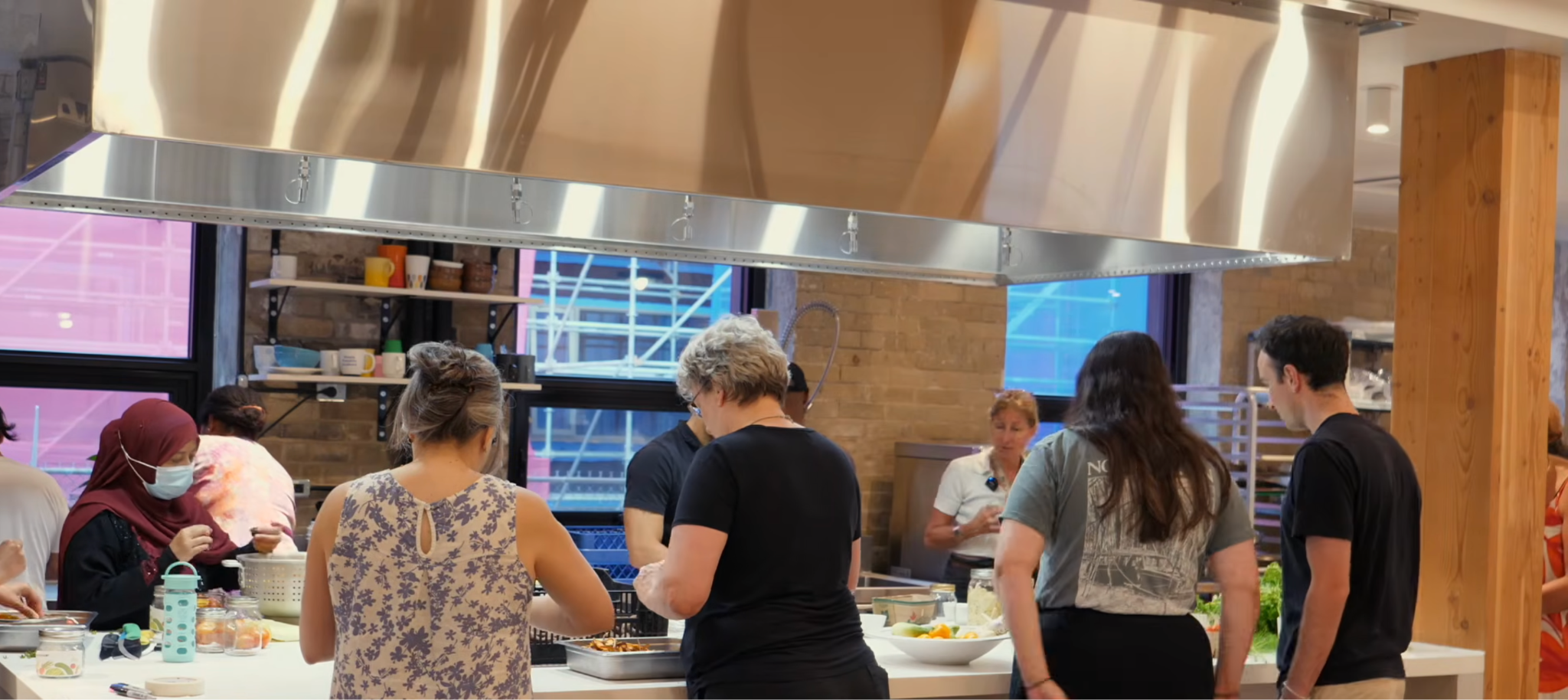
Attendees learned some of the facts of fermenting, including the most important one: fermenting at home is easier than it sounds!
You don’t need a lot of tools: a digital scale, glass jars, non-iodized salt, filtered water and, of course, your favourite produce. With all your tools ready, you’ll need to know a few basics, like the knowledge Gamze so generously shared this fall. And then you’ll be set to enjoy your favourite produce throughout the seasons.
Curious to try? Start with the facts of fermentation below that our workshop participants learned.
Fermenting isn’t the same as pickling
When you pickle something, you’ll add an acid (such as lemon juice or vinegar) to the vegetable. Pickles don’t have probiotics because the added acid and the heat kill the probiotics. So, they’ll have a sharp, vinegary taste.
When you ferment foods, you grow the naturally occurring bacteria on the produce to build the acidity. Because of that natural process, fermented foods are full of millions of probiotics and taste richer (think: umami, rich, tangy flavours).
It starts with bacteria
Lactobacillus is a bacteria that you’ll find naturally on fruits and vegetables. It’s what we need to ferment foods. When you fully submerge your produce in the brine (salt water) that’s in your jar, lactobacillus can grow. And because the food is fully submerged, it’s safe—mold can’t grow!
Salt fuels fermentation
Did you know fermentation happens in a simple mixture of salt and water? The trick is to get the ratios right. Usually, foods will ferment best in a mixture that is 2-3% salt. But if you’re fermenting a tougher vegetable, like sweet potato or celery, you’ll need as high as 5% salt.

Pre-, pro-, and postbiotics
Prebiotics and probiotics often come up when people are talking about superfoods and nutritional benefits because they’re so good for our health. But they also play an important role in fermentation.
Prebiotics live on the outside of fruit and vegetables. We can’t digest them, but they feed the bacteria we need for fermentation.
Probiotics are the live bacteria (e.g., lactobacillus) and yeast that grow from prebiotics. They benefit our gut and digestive system.
Postbiotics are what remain after your body has digested probiotics. They can be nutritional beneficial, including, for example, vitamin K.
Fermentation red and green flags
When fermenting, you should have crisp vegetables, a clean, pleasantly tangy smell, and a slightly cloudy (not overly bubbly) brine.
You’ll know your fermented foods have gone bad if they’re soft, smell foul, or there is fuzzy green, black or blue mold.
Why ferment?
Fermenting your own foods can help you reduce waste because you’ll use all your produce before it goes off. You’ll be able to keep your food longer and enjoy different delicious, healthy flavours all year long.
Plus, it’s fun! It’s something the whole family can do and enjoy.
Attend our next workshop
Want to learn more? Watch the recap of Gamze’s fermentation presentation (12 min.) and look out for upcoming workshops! We host a range of hands-on workshops where you can learn how to enjoy the nutrients and benefits of hand-grown and hand-prepared foods!
Find all upcoming events and workshops on our Instagram and Facebook.